What is Cognitive Behavioral Therapy (CBT)?
Cognitive Behavioral Therapy (CBT) is more than just a technique—it's a comprehensive, evidence-based approach to psychotherapy that has transformed how we understand and treat mental health challenges. Known for its practical, solution-focused framework, CBT is widely used to support individuals struggling with anxiety, depression, trauma, and a range of emotional or behavioral difficulties.
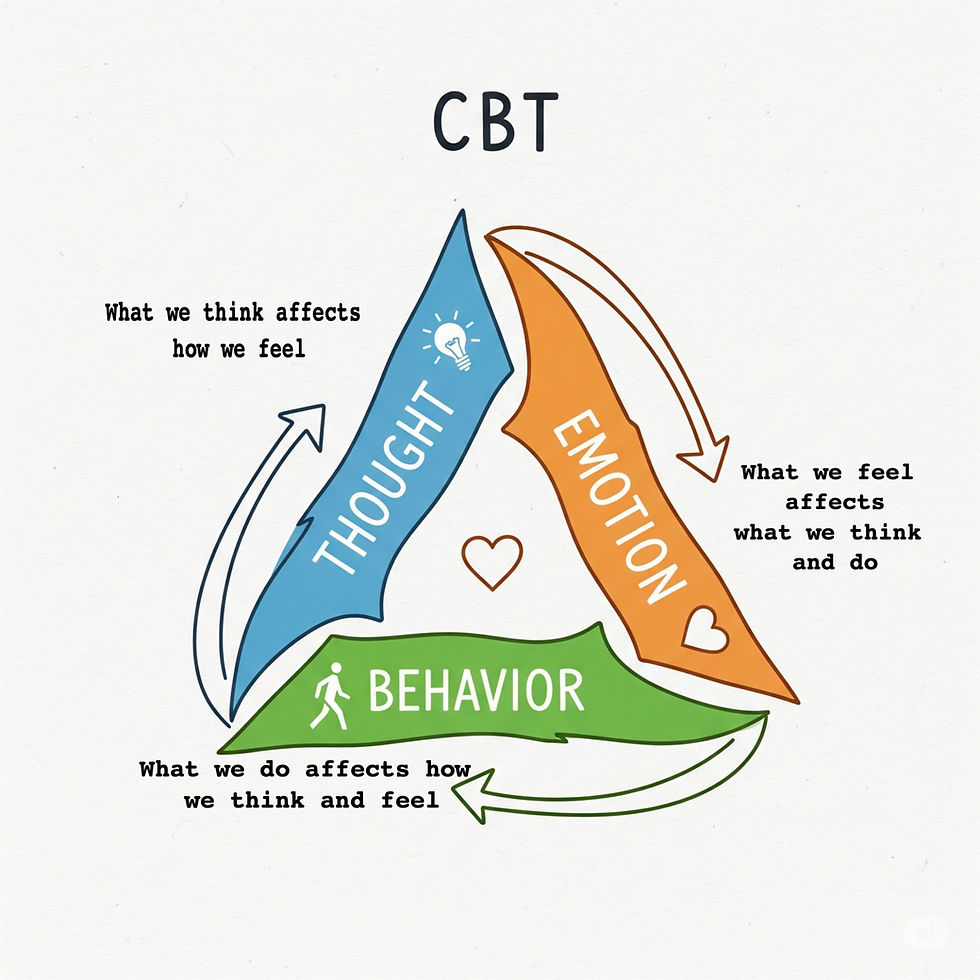
At its core, CBT is based on a simple but powerful idea: our thoughts, emotions, and behaviors are deeply interconnected. When we learn to identify and challenge negative thought patterns, we create the possibility for meaningful emotional and behavioral change.
Core Principles of CBT
CBT is structured, goal-oriented, and grounded in principles that guide both the therapist and client through a clear process of transformation. Here are some of the foundational ideas behind the approach:
1. The Cognitive Model of Emotional Response
CBT teaches us that it’s not the events in our lives that upset us, but our interpretations of those events. By examining and shifting our internal dialogue, we can change how we feel and behave—even when our external circumstances remain unchanged.
2. Brevity and Focus
Unlike more open-ended therapies like psychoanalysis, CBT is typically short-term and time-limited. The number of sessions can vary, but the focus is always on helping clients gain practical tools quickly. Homework and practice between sessions accelerate progress and reinforce learning.
3. The Role of the Therapist
While a strong therapeutic relationship is important in any therapy, CBT places more emphasis on teaching clients how to become their own therapists. The therapist acts as a coach or instructor—collaborative, supportive, and always guiding clients toward autonomy and self-understanding.
The Philosophical and Educational Roots of CBT
What makes CBT truly unique is its grounding in both ancient philosophy and modern educational theory. These influences shape the empowering, client-centered nature of the work.
1. Stoic Philosophy & the Socratic Method
CBT draws from Stoic thought, which emphasizes control over one’s internal world. You can’t always control what happens to you—but you can control how you respond. Through the Socratic method, therapists use guided questioning to help clients explore and challenge unhelpful thoughts. For example, a client might learn to ask, “Is it possible those people laughing aren't laughing at me at all?”
2. CBT as an Educational Process
CBT sees emotional responses as learned behaviors—and like all learning, these can be unlearned and replaced with healthier patterns. Clients are empowered with knowledge and tools, not just to feel better temporarily, but to navigate life more effectively long after therapy ends.
3. Inductive Reasoning
Rather than treating thoughts as facts, CBT encourages us to see them as hypotheses. These can—and should—be tested against evidence. If the evidence doesn’t support a thought, it can be adjusted. This scientific, reality-based approach supports mental flexibility and resilience.
Homework: Where Change Happens
One of the most distinctive features of CBT is its emphasis on homework. Real transformation doesn’t happen just in the therapy room—it happens in everyday life. Assignments might include journaling, thought records, behavior experiments, or practicing new skills in real-world situations.
Just like you can’t learn math by only attending class, you can’t change your thinking patterns without practicing them. Homework helps clients take ownership of their progress, and it’s often the key to lasting, meaningful change.
Final Thoughts
CBT is a powerful tool for anyone seeking clarity, self-awareness, and practical strategies to navigate life’s challenges. By focusing on the relationship between thoughts, emotions, and behaviors, and by empowering clients to challenge and reshape their inner world, CBT offers a pathway to greater emotional freedom and well-being.
References & Further Reading
Beck, J. S. (2011). Cognitive Behavior Therapy: Basics and Beyond (2nd ed.). The Guilford Press.
Burns, D. D. (1980). Feeling Good: The New Mood Therapy. Harper.
Dobson, K. S., & Dozois, D. J. A. (2019). Handbook of Cognitive-Behavioral Therapies (4th ed.). The Guilford Press.


Comments